BIOFONIA · in Denmark
Young people
in Denmark
BIOFONIA was built with young people in Denmark from the start — that is what the Danish funding was for, and it is what the work is for.
BIOFONIA · in Denmark
BIOFONIA was built with young people in Denmark from the start — that is what the Danish funding was for, and it is what the work is for.
Made with pupils
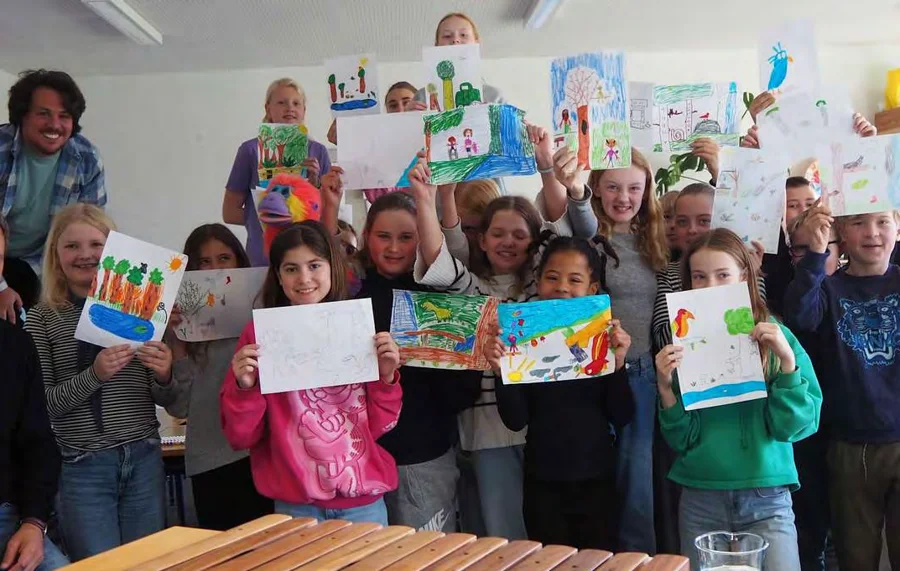
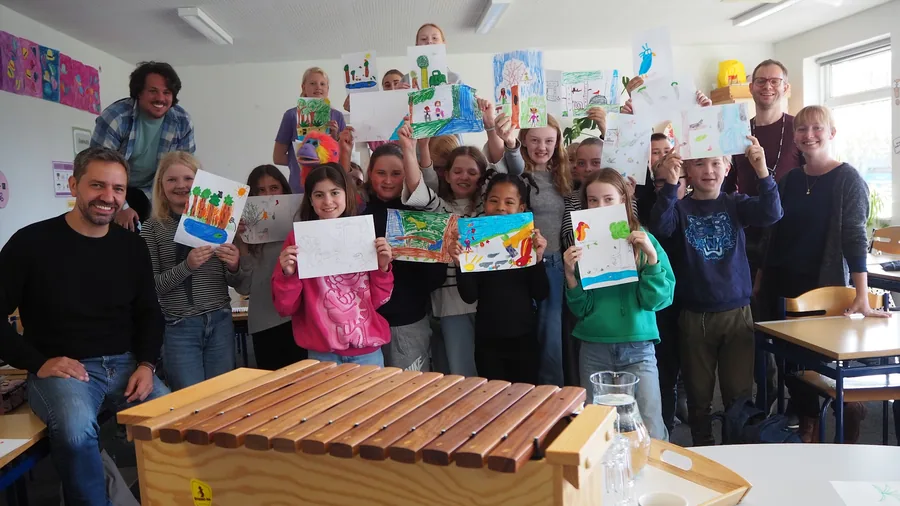
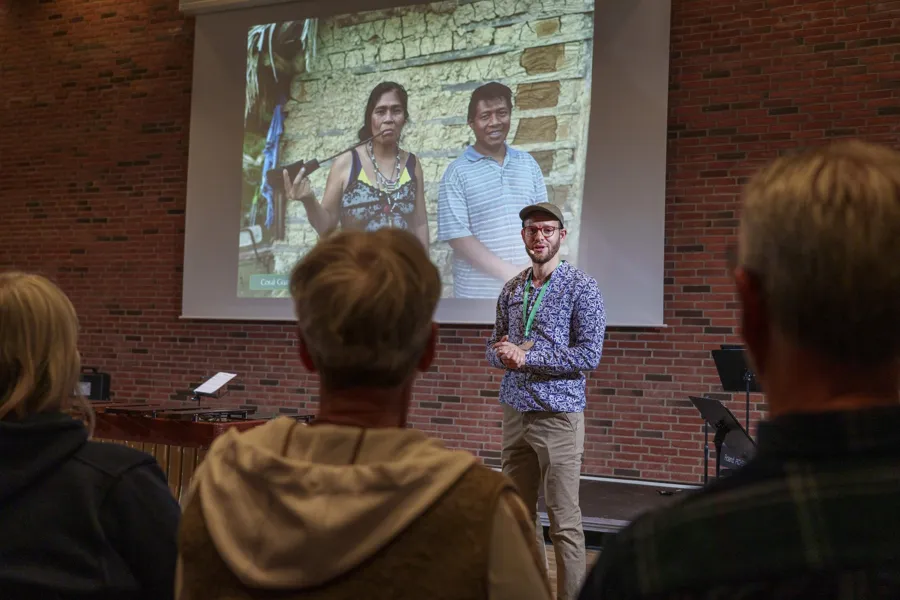
With a grant from OpEn — the Ministry of Foreign Affairs' Information and Engagement Fund, managed by CISU — two classes of 6th and 7th graders at Bjerregrav Friskole outside Viborg, around 45 pupils, spent several months with the artists: composer Mathias Madsen Munch, soloist Ronni Kot Wenzell and the film directors Philip Piaget and Rikke Planeta of Ouros Animation. They developed visual, dramaturgical and musical ideas for how a rainforest could be told through music and animation, and their ideas went directly into the finished work.
Most of the pupils come from farming families. Before the programme they rated the statement "I know what the UN Global Goals are" at around 2.3 on a scale from 1 (strongly disagree) to 5 (strongly agree). Their teachers' account of what changed is published in CISU's Annual Report 2024: "Before the lessons none of the pupils knew anything about the Global Goals. Afterwards they all knew a great deal more."
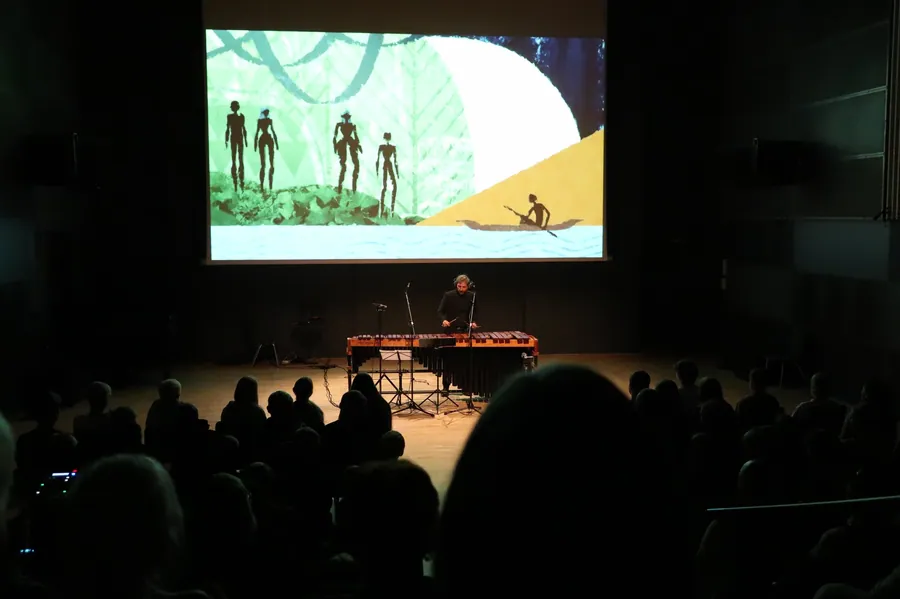
The pre-premiere in Viborg had 220 in the hall, the outreach group among them, and afterwards the whole work was played at the school for all 150 pupils. The work was shown to the Guaraní in Brazil — it mattered to them, and the team understood it as part of why they said yes. The movement it became →
Made with singers and young musicians
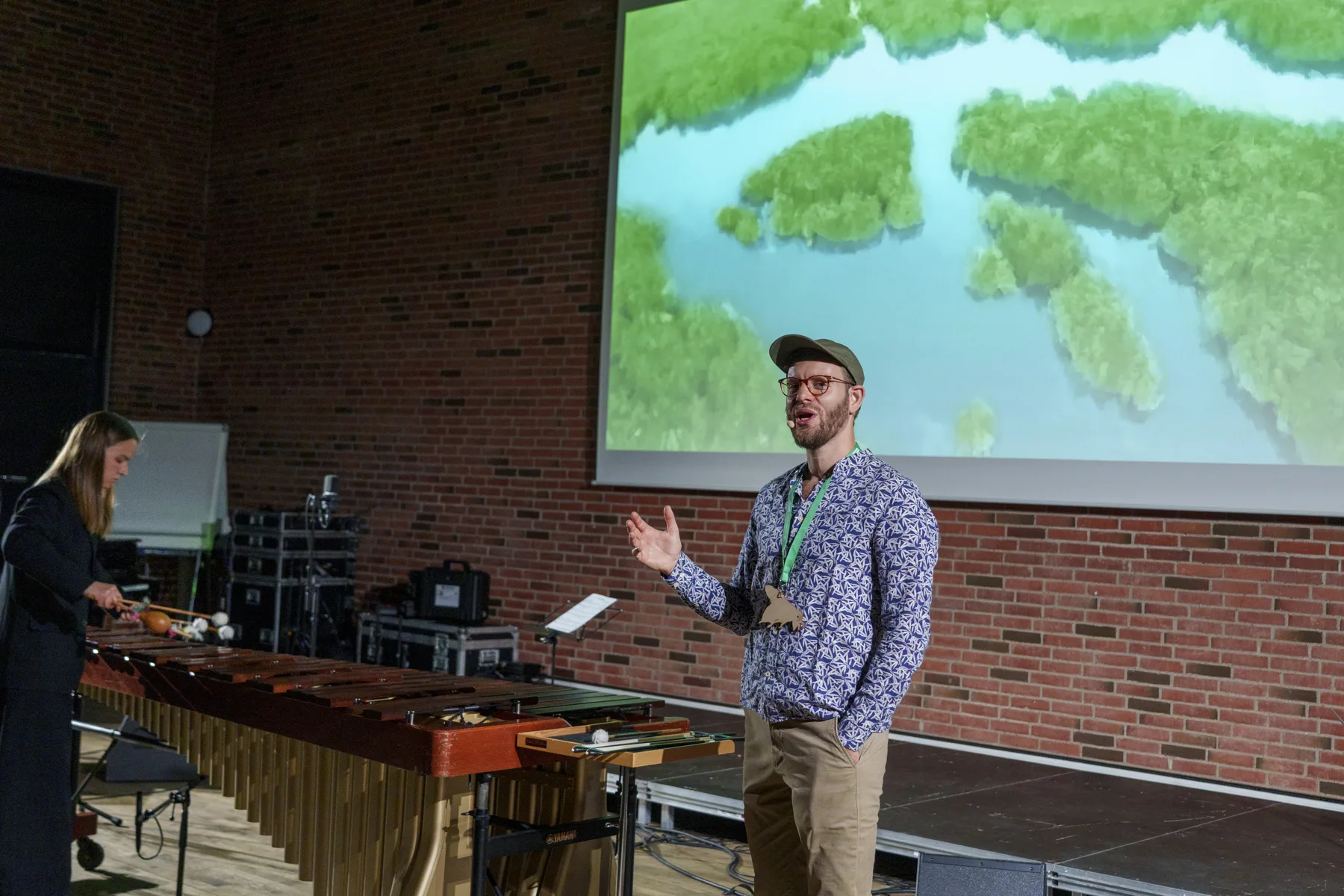
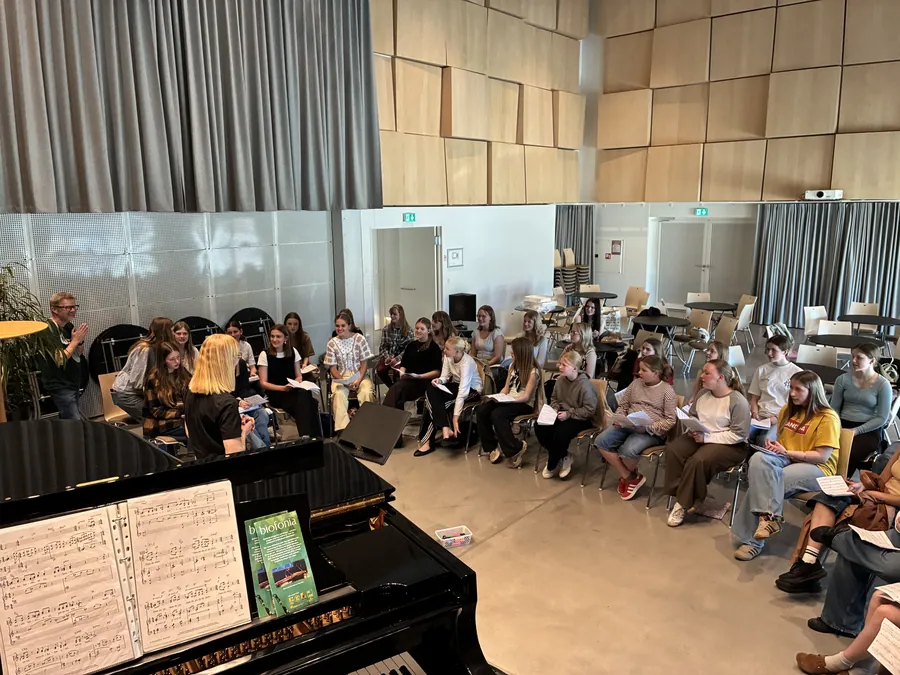
From 2025 the work moved north. Young musicians from Nordjyllands Ungdomssymfoniorkester played ATLÂNTICA at Kulturmødet Mors, where the audience also learned to sing in Guaraní and Kukama. Through the winter of 2026 Nordjysk Pigekor worked with BIOFONIA in a series of workshops, and on 30 May 2026 they gave the Danish premiere at Naturmødet in Hirtshals, with a solo percussionist of their own generation, Laura Tolbøll.
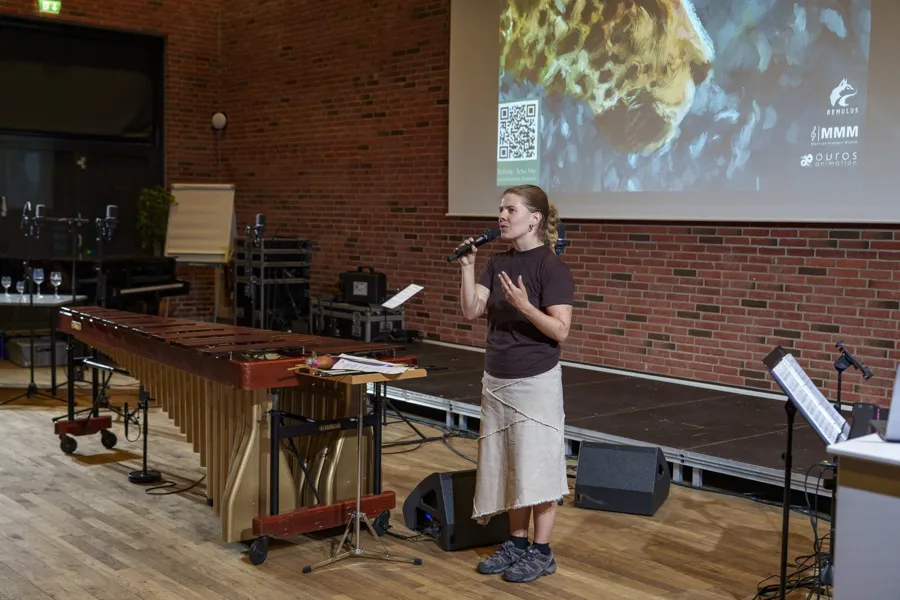
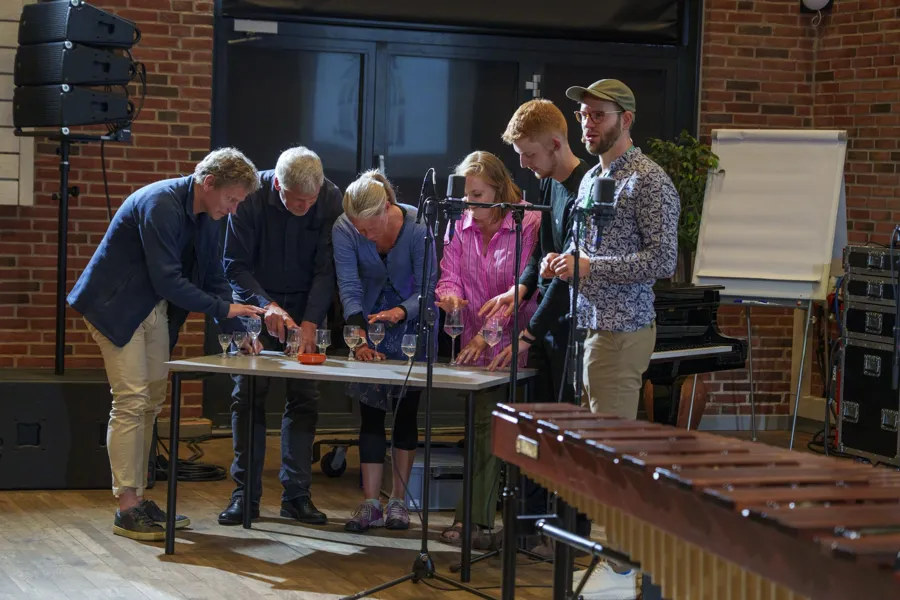
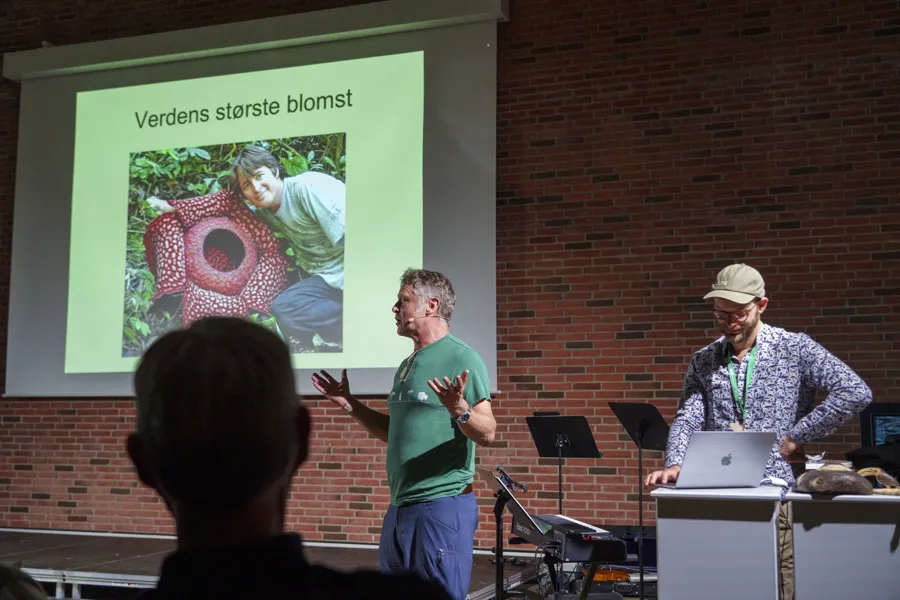
At Naturmødet the audience did not only listen. They learned a clap from Peru; they sang a Guaraní song from a picture rebus, with the sounds written up on boards; and volunteers came up on stage to play glasses tuned to a pentatonic scale by Morten Lønborg Friis, while the hall closed their eyes and sang over the sound. Body, voice, instrument — three ways into the same work, and about two minutes from listening to taking part.
“When we sing together, we take in a culture in a different way. Watch a video and you have forgotten it in two hours. Sing the song, and you will remember it.”
Mathias Madsen Munch, on the LEARN stage, 29 May 2026.
The choice followed the work itself. AMAZÔNICA is carried by a woman's voice, Danna Gaviota's, and its lyrics are written in the women's form of Kukama. So before a single note was rehearsed, the singers were told what they were becoming part of — the Kukama, the river, the people the songs belong to. Much of that conversation happened in the breaks between rehearsals: what it is like to be in the rainforest, and how different it is from what they had expected.
The youth orchestra was to have carried a larger part of the Danish premiere. When that became impossible, the choir took its place — and what began as a stopgap became a discovery: that voices, a choir's or the audience's, are essential to the work. The soloist, Laura Tolbøll, comes from its ranks. At Naturmødet the choir sang with her, with Morten Lønborg Friis on violin and glass harp, and with Anton Skovbjerg.
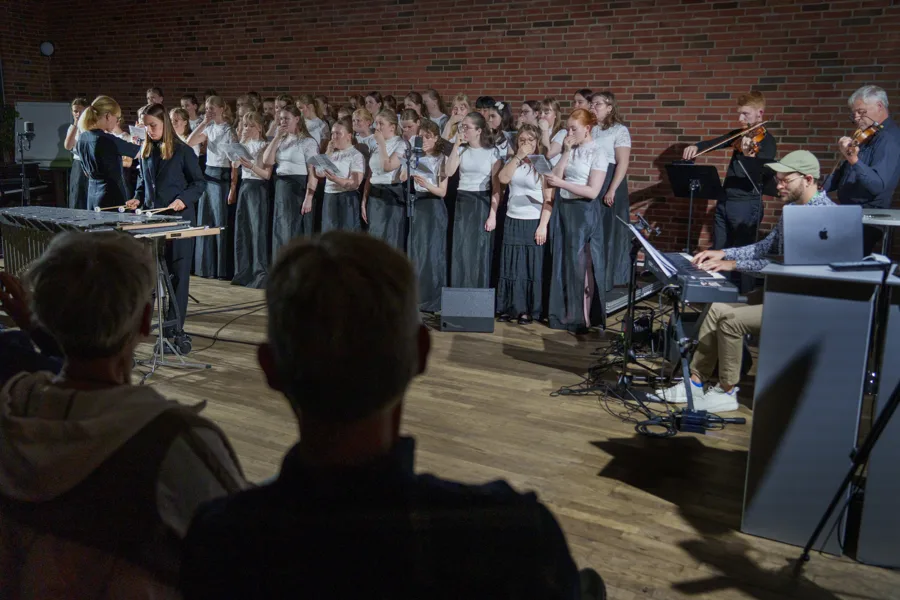
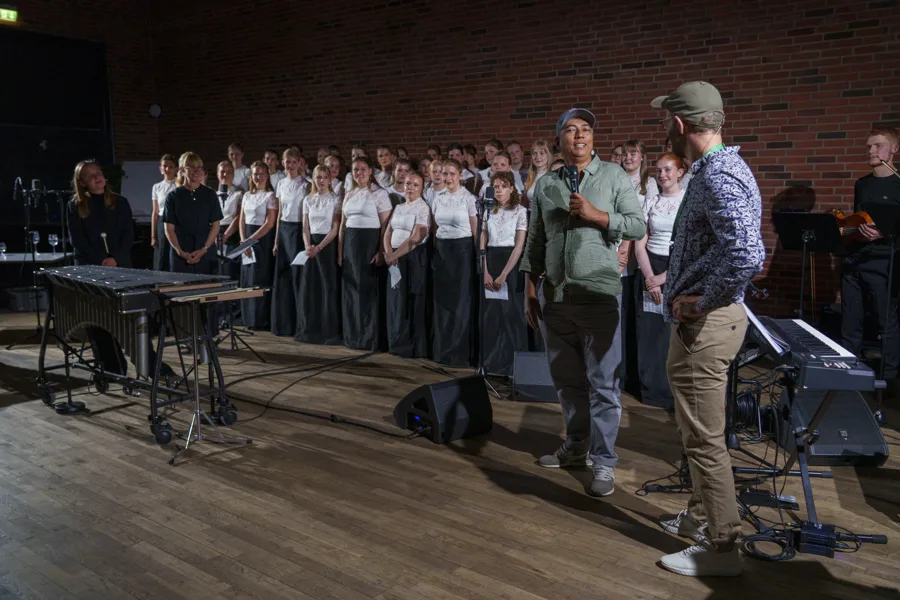
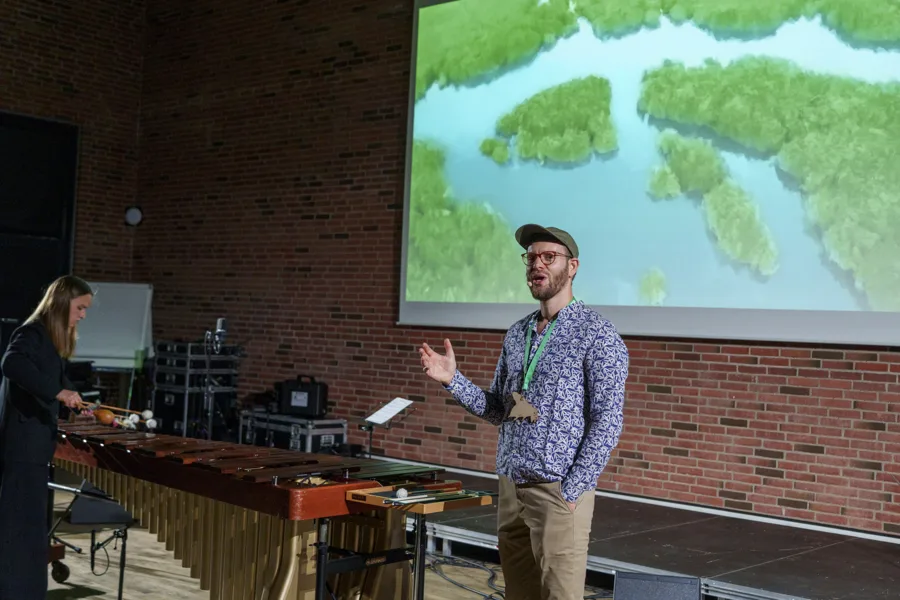
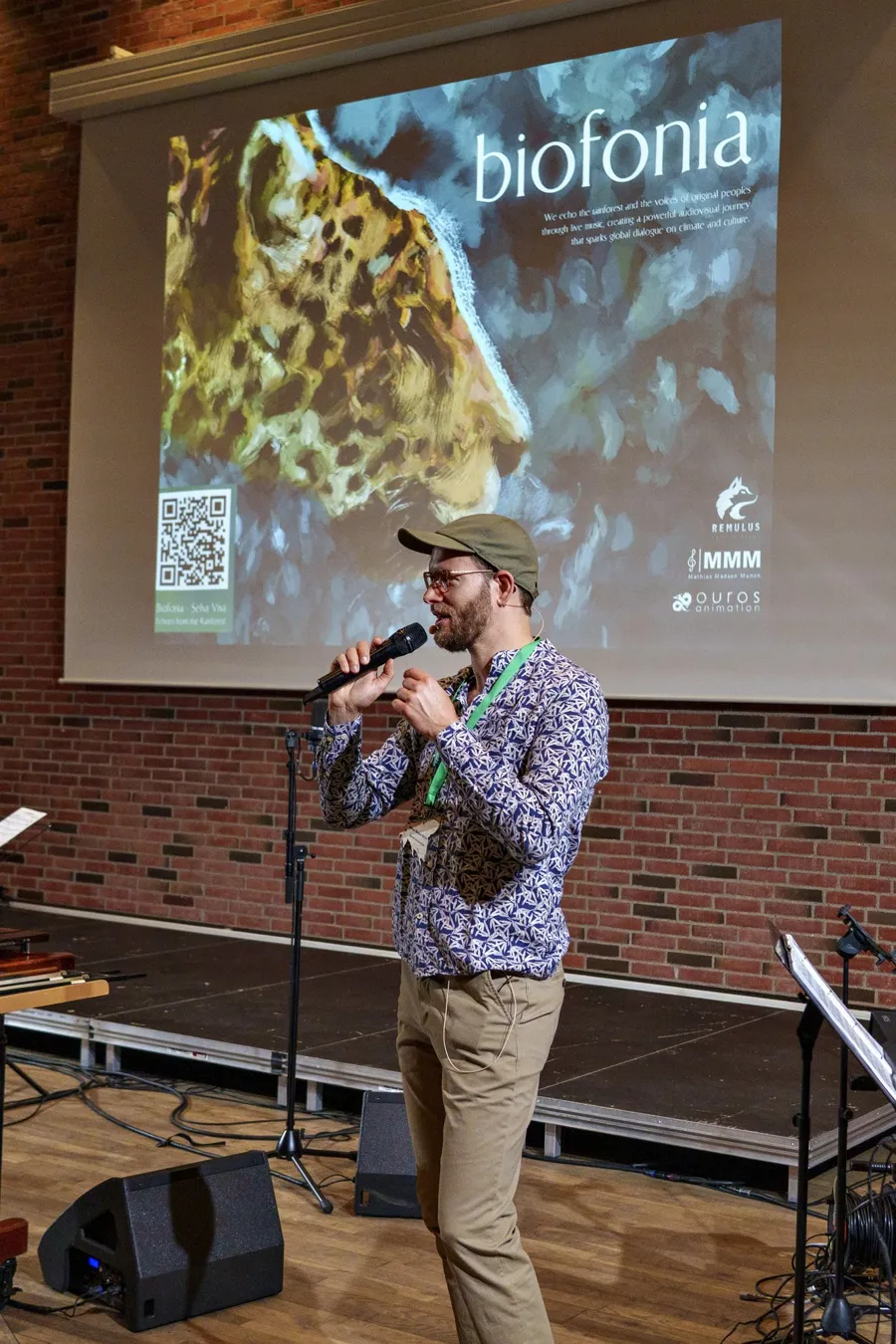
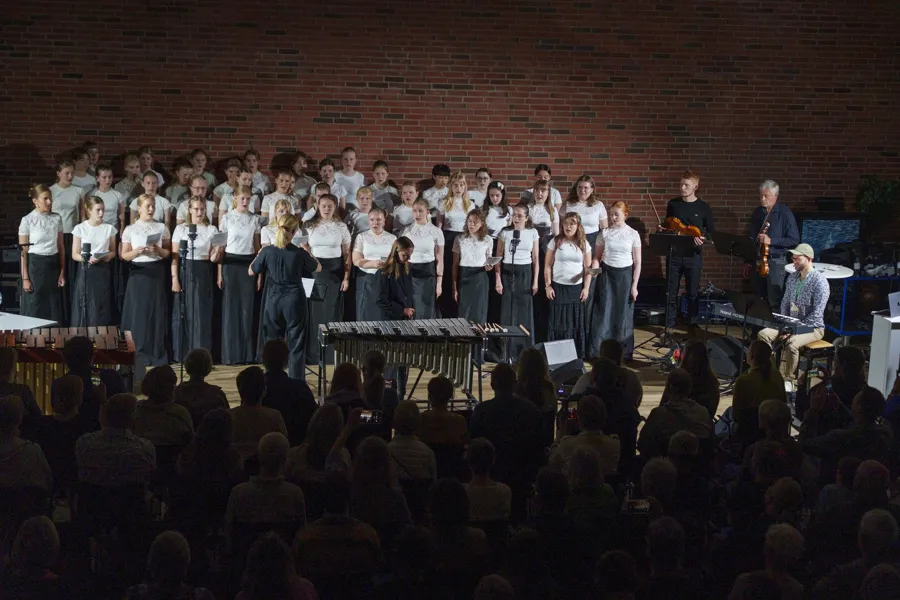
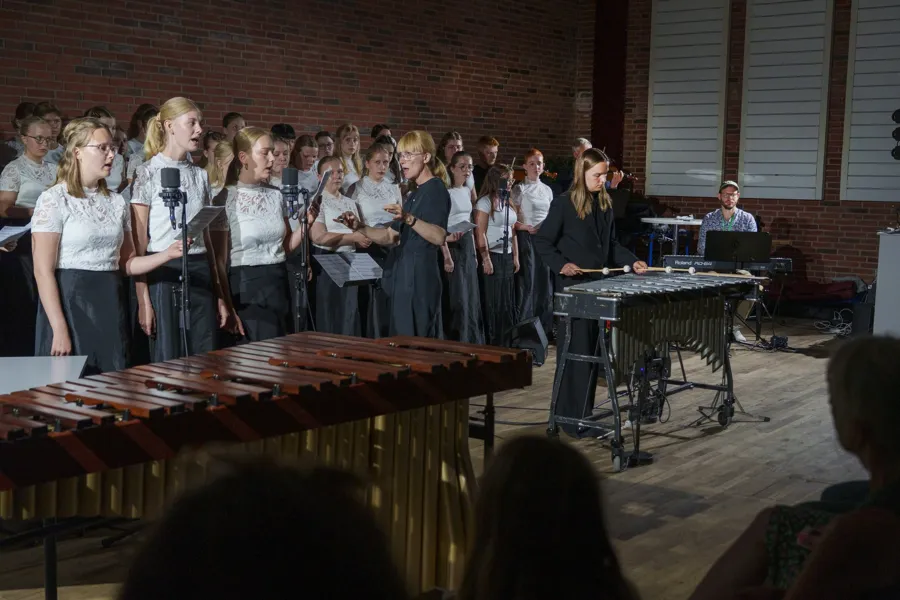
They learned about the Kukama people and worked on the pronunciation of a language none of them had heard. They were in dialogue with the musicians about the work, and they built their own answer to why they stand on a stage and sing this music. With the choir, a Danish version of one of the movements was developed, so that a Danish audience hears the songs in its own language as well as in Kukama. Body percussion brought the whole choir in; soloists from the choir took single passages; and the singers were shown what the animation does in the work. The final rehearsals, at Vendsyssel Teater, put all the music together — much of it learned by ear and in dialogue, since not all the singers read music.
A film of the singers learning the Kukama song — call and response, clapping — has become part of the work, and goes with it to the performances that follow.
When Naturmødet asked BIOFONIA to take part in Climate Action Day, the choir added an open rehearsal in Hjørring: the project was presented, excerpts of the choral movements were sung, and Leif Lund Jakobsen, head of Naturmødet, spoke with the singers about why a choir singing this is part of a public conversation, and not only a concert. In January 2026 DR P2 had broadcast live excerpts from the COP30 concert in Belém; at Naturmødet in May, Adriano, one of BIOFONIA's partners from the Amazon, stood on the same stage as the choir.
Reception
“It is completely different. It is great that you can connect it to something — it is not just a melody; you can hear how the Indigenous people over there sing it.” Laura Tolbøll · solo percussionistNaturmødet, Hirtshals, 30 May 2026
“It is a language that is dying out, so it is really special to be allowed to sing it.” Singer, Nordjysk PigekorNaturmødet, Hirtshals, 30 May 2026
“I hope they will be happy and surprised that someone up here in the cold north enjoyed singing their songs in their language — and that they can feel proud of it.” Christina Kjærulff · conductor, Nordjysk PigekorNaturmødet, Hirtshals, 30 May 2026
"It's hugely exciting to be allowed to sing a song that means so much to some people. We know how much it means to them over there — and music can do something quite special, whether you understand the words or not. There is an emotional connection in it." Karoline Kildahl · Second soprano, Nordjysk PigekorLigeHer.nu, 31 May 2026 · excerpts, translated from Danish
"The thought that we are singing in a language that may be dying out, but is still spoken by people deep inside the Amazon, is actually rather moving. There are real people behind this language, and the songs we sing are some of their songs." Christina Kjærulff · Conductor, Nordjysk PigekorLigeHer.nu, 31 May 2026 · excerpts, translated from Danish
"BIOFONIA is an outstanding example of how art and culture can open new sensory channels and perspectives on the meaning of nature — locally and globally." Leif Lund Jakobsen · Director of NaturmødetNordsøPosten, 30 January 2026 · translated from Danish
The outreach programme in Denmark was funded by OpEn — the Ministry of Foreign Affairs' Information and Engagement Fund, managed by CISU.